
For those of you who know me or follow me on X @AntwisNicola, you will appreciate that I spend a considerable amount of time on the touchline watching rugby. All three of my children played rugby on the muddy fields of North Bristol RFC when they were younger. And now as young adults, two of them continue to play rugby. My eldest, Iona, plays for Sale Sharks Women and my youngest, Lewis, has been representing the Army U23 team. Over the intervening years I have marvelled at the leadership lessons they have gained from their rugby experiences.


As you know, leadership comes in many forms, and leadership lessons can come from many different places. But few experiences compare to the lessons learned from rugby. Rugby demands teamwork, discipline, strategy, and a relentless pursuit of improvement — qualities that directly translate to effective school leadership. Here are some powerful leadership lessons from rugby that every school leader can apply when creating teams that flourish.

Always Be Ready—Anticipate, Don’t React
In rugby, waiting until the opponent makes their move can be a costly mistake. The same is true in leadership. The best leaders anticipate challenges and opportunities, making proactive decisions rather than reacting to problems as they arise. By staying ahead of the game and reading the situation, you’ll create a culture of preparedness and resilience in your school.
As a headteacher, and now as a trust leader, I use a SWOT analysis regularly alongside SLT to prompt accurate evaluation and future proofing of schools.
A SWOT analysis is a simple yet powerful tool for strategic planning. It helps identify Strengths, Weaknesses, Opportunities, and Threats. The key benefits include:
Better strategic planning by understanding internal strengths and weaknesses, and external opportunities and threats
Informed decision-making by basing choices on a comprehensive assessment of factors.
Practice risk management by addressing potential threats early.
Effective resource allocation to areas with the most potential.
Enhanced team collaboration through shared insights and discussions.
Focus and direction by prioritising critical areas for improvement or growth.
Overall, a SWOT analysis helps school leaders to align their strategies and anticipate a possible future.

Be Humble
No matter how skilled a rugby player is, the game humbles everyone. Just like a brilliant try can be undone by a simple mistake, leadership success requires humility.
Humble leaders are approachable and open, creating an environment where staff feel comfortable sharing ideas and concerns. This builds trust and promotes open communication, which improves teamwork and collaboration.
Humble leaders acknowledge their limitations and seek input from others. This encourages a culture of continuous learning and growth, where team members feel empowered to contribute and take ownership of their work.
Humble leaders recognise that they don’t have all the answers, which makes them more open to diverse perspectives. This leads to better decision-making by incorporating a wide range of insights and ideas.
Humble leaders are more likely to accept feedback and learn from mistakes, making them adaptable and resilient in the face of challenges. This quality helps our schools navigate uncertainty and change more effectively.
Leaders who show humility model behaviours like empathy, respect, and inclusivity. This helps create a healthy, positive workplace culture where staff support each other and work towards shared goals.
Humble leaders focus on the success of the team rather than seeking personal glory. This long-term, collective approach leads to sustainable success, as it nurtures a strong, capable, and committed workforce.
Overall, humble leadership fosters trust, encourages collaboration, and shows that you are invested in the growth of others.
Communication Is Crucial
On the rugby field, constant communication keeps the team coordinated and focused. In school leadership, clear, transparent communication is equally vital. Ensure your team knows the goals, understands their roles, and feels heard. When communication is open and consistent, misunderstandings decrease, and morale rises.
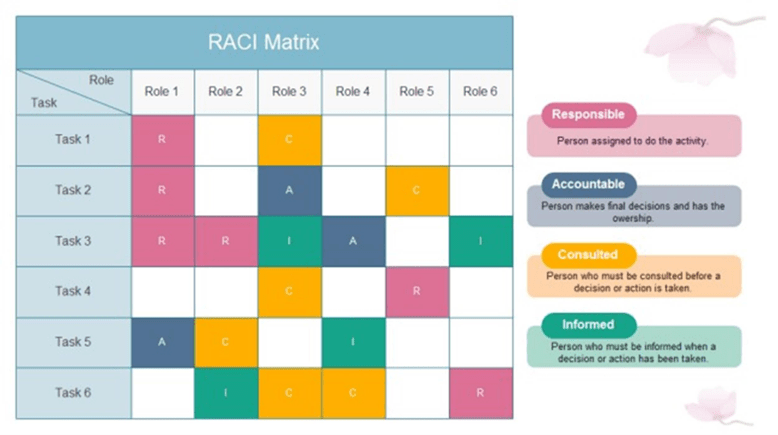
An excellent tool to support communication is a RACI. A RACI matrix (Responsible, Accountable, Consulted, and Informed) is a valuable tool used to clarify roles and responsibilities within a project or organizational process. A RACI outlines who is:
Responsible (R):
The person(s) who do the work to complete the task. They are responsible for action and implementation.
Accountable (A):
The person who is ultimately answerable for the task or decision. Only one person should be accountable for each task to avoid confusion.
Consulted (C):
The people who are consulted for their input before a task is completed. These individuals provide advice, feedback, or expertise.
Informed (I):
The people who need to be kept informed about the progress or results of a task. They are kept in the loop but do not provide direct input or decision-making.
A clear RACI not only enhances communication but also ensures there are clearly defined roles, improves accountability, improves decision making, reduces conflict and increases efficiency.
You Play How You Practise
The preparation you put in before a rugby match determines how well you’ll perform under pressure.
TCUP is a strategy used by the England rugby team to handle pressure effectively, ensuring that players can think clearly and make the best decisions in high-stress moments, both on and off the field. This approach has been instrumental in their success, particularly during critical games and tournaments.
Former England coach Sir Clive Woodward introduced the concept of TCUP (thinking clearly under pressure) when he was in charge of the team, especially during their successful run leading to winning the 2003 Rugby World Cup. His emphasis on mental preparation and the ability to think clearly in high-pressure situations was a key factor in England’s performance.
Players were trained not only in physical skills but also in mental scenarios that would test their decision-making abilities. The philosophy continues to be relevant in modern rugby, as it aligns with the sport’s demands for quick thinking, adaptability, and resilience.
The same applies to school leadership. Success comes from regular reflection, professional development, and refining your strategies. If you consistently practice excellence and accountability, those habits will reflect in your leadership, especially during challenging times.

Celebrate the Wins and Learn from the Losses
In rugby, teams celebrate victories but also scrutinise their losses to understand what went wrong.
This principle is used in many fields, as Matthew Syed explains in “Inside the Black Box.” It is often used in the aviation industry and the medical profession where near misses and catastrophic events are analysed to understand fully the learning. Syed explains that failure should be viewed as a crucial part of the learning process. Analysing mistakes helps leaders and teams improve and develop resilience.
As a school leader, it’s crucial to acknowledge successes, whether big or small, and celebrate them with your team. At the same time, every setback is a learning opportunity. Take time to review, reflect, and make necessary adjustments without assigning blame.

Being Disciplined Pays Off
Rugby players know that sticking to their game plan, no matter how tempting it is to deviate, leads to success. School leadership also requires discipline—staying true to your vision, upholding your values, and consistently working toward long-term goals. When challenges arise, your discipline will ensure you stay focused on the bigger picture.
A leadership lesson which I learnt early in my career is that your staff, pupils and community are watching and listening to you – all the time. It is so important to truly live by your values. Some might say you need to walk the walk and talk the talk. But that is not enough! You also need to be mindful of those non-verbal behaviours. A brilliant colleague of mine continually reminds me that the standards you walk past are the standards you accept. So make sure your words and actions truly model your values.

You Are Part of Something Bigger Than Yourself
Rugby players understand that the team is greater than the individual. School leadership is about creating a flourishing community where pupils, teachers, and staff feel valued and supported. Always remember that you’re leading not just for personal success but for the growth of everyone in your school. Your role is crucial, but so is everyone else’s.
A flourishing school, as described by Andy Wolfe in his book Flourishing Together, is one that prioritises strong leadership, a collaborative culture, pupil-centred approaches, positive relationships, engagement, inclusivity, continuous improvement, and community involvement. By fostering these elements, schools can create an environment where both pupils and educators flourish, ultimately leading to greater academic and social success.

Believe in Yourself
Rugby is a game of confidence, and so is leadership. As a school leader you’ll face tough decisions, criticism, and sometimes self-doubt. However, believing in your abilities and the strength of your team will carry you through. Trust your instincts and your preparation, and lead with confidence even in uncertain times.
As a leader, I have often felt the most dreadful imposter syndrome; doubting my skills, knowledge and abilities. Imposter syndrome is characterised by persistent feelings of self-doubt and insecurity. Research suggests that imposter syndrome affects a significant portion of the population, with studies indicating that anywhere from 20% to 70% of people experience it at some point in their careers. It is particularly common among school leaders. On those days, when my imposter syndrome was at its worst, I would reach out to my peers for support and guidance. One colleague often joked, that on days like that, the best thing about being a headteacher was that your chair spins!!

It Takes No Talent to Hustle
Hustle is a key component of rugby. The game rewards those who put in the extra effort — chasing down a loose ball, making that extra tackle. In leadership, putting in the work, being visible, and going the extra mile require no special talent, just dedication and a strong work ethic. Your hustle will inspire others to match your effort.
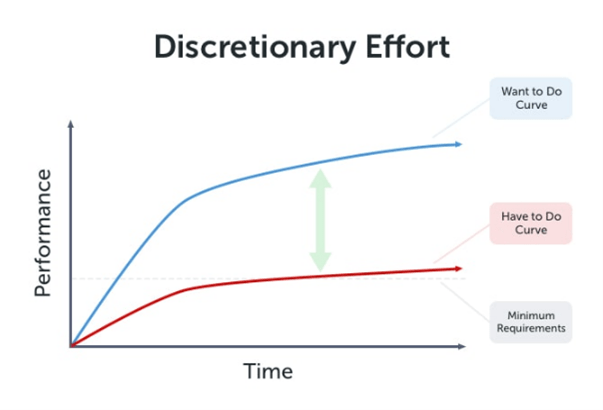
Discretionary effort describes the level of effort and engagement that staff choose to exert beyond their basic job requirements. It’s the extra mile that staff willingly walk to achieve better outcomes, enhance team performance, or contribute to your school’s success. Understanding and fostering discretionary effort can be a game-changer for schools aiming for high performance and a positive workplace culture.
You’ve Got What It Takes, But It Will Take Everything You’ve Got
Rugby is one of the most physically and mentally demanding sports out there. Similarly, school leadership requires everything you’ve got — patience, passion, dedication, and grit. When you commit fully, you inspire those around you to give their best as well. Your energy and determination will set the tone for your entire school.
School leaders play a critical role in shaping the educational experience of pupils and the work environment for staff. Given the demanding nature of their responsibilities, prioritising their well-being is essential not only for their own health but also for the overall success of the school community.
The well-being of school leaders is vital for creating a thriving school. By prioritising their health, leaders can make better decisions, improve staff morale, enhance pupil outcomes, and foster a positive school culture. Investing in the well-being of school leaders is an investment in the entire school community, ultimately leading to a more successful and sustainable education system.
This year, I set myself two well being goals; to walk 20,000 steps a day and to read 50 books this year. (More of that in a future blog maybe??) I have kept up with my walking target, with the help of my son’s dog, Elvis. And I am on track to have read 50 books by the end of the year – just 6 more to go.

Teamwork Is the Best Work
Rugby is the ultimate team sport — no individual can win alone. The same goes for school leadership. A strong team, where each person plays their role to the best of their ability, is unstoppable. Building trust, fostering collaboration, and recognising the unique strengths of your team members will lead to collective success.
Distributed leadership is an approach that emphasises the sharing of leadership responsibilities among various members of the school community, rather than concentrating power in a single individual or a small group. This model fosters collaboration, empowers teachers and staff, and enhances the overall effectiveness of the school.
Achieving distributed leadership in a school is the elixir; it requires a commitment to collaboration, empowerment, and shared responsibility. By fostering a culture that values the input and expertise of all staff members, schools can create an environment where leadership is a collective endeavour. This not only enhances the effectiveness of the school but also contributes to the professional growth, learning and satisfaction of teachers and staff, ultimately benefiting pupils and the wider school community.

In both rugby and school leadership, success isn’t about individual brilliance — it’s about the collective endeavour, resilience, and heart you bring to the field or the school. So, whether you’re leading a team of teachers, support staff or pupils, these lessons from rugby will help you inspire, guide, and create a culture where everyone thrives and flourishes.
Just remember: leadership is a marathon, not a sprint, and if you put in the work, stay humble, and lead with passion, the results will speak for themselves. And if you have some time …… go and watch a rugby match!

If you enjoyed this blog, please take a look at the Antwis Collaborative website. Home (antwiscollaborative.co.uk)
At Antwis Collaborative, we are dedicated to empowering school leaders through personalised coaching, cutting-edge professional learning, and unwavering support. With decades of experience in education, we understand the challenges and opportunities that today’s school leaders face. Our goal is to help leaders unlock their potential, foster positive school cultures, and create transformative learning opportunities that impact both staff and pupils.

With 30 years of experience working in schools, including 20 years as a school and Trust leader, Antwis Collaborative brings expertise, insight, and empathy to the table. We are more than a consultancy; we are partners in your leadership journey. Our collaborative approach ensures that support is tailored to the individual needs of each leader and school, driving sustainable, long-term impact.
Connect with Us: Let’s explore how Antwis Collaborative can support your leadership and your school. Home (antwiscollaborative.co.uk)
 AntwisCollaborative
Leave a comment