
Time is one of the few things we all have in equal measure. There are 24 hours in every day. Yet, somehow, some days feel full of purpose and achievement, while others seem to disappear without us being entirely sure where the time went. Over the summer, the Football World Cup gave us a rather unexpected reminder about the importance of making time for what matters. Simon had a plan. He wanted to watch every match. Every. Single. Match. It didn’t matter what time the game kicked off. It didn’t matter how late it finished. If football was being played, Simon was determined to watch it! I, however, did not share quite the same enthusiasm. So, we reached a compromise. We created a World Cup Room.

The television from our bedroom was moved into the spare room, creating a dedicated space where Simon could enjoy as much football as he wanted, whenever he wanted. And for me, something rather interesting happened. I suddenly had more time. Not literally, of course. The days didn’t become longer, and nobody had gifted me a few extra hours. But I had created space to do something that was more important to me. Instead of aimlessly scrolling through television channels or automatically putting Netflix on in the evening, I started reading. More intentionally. More regularly.
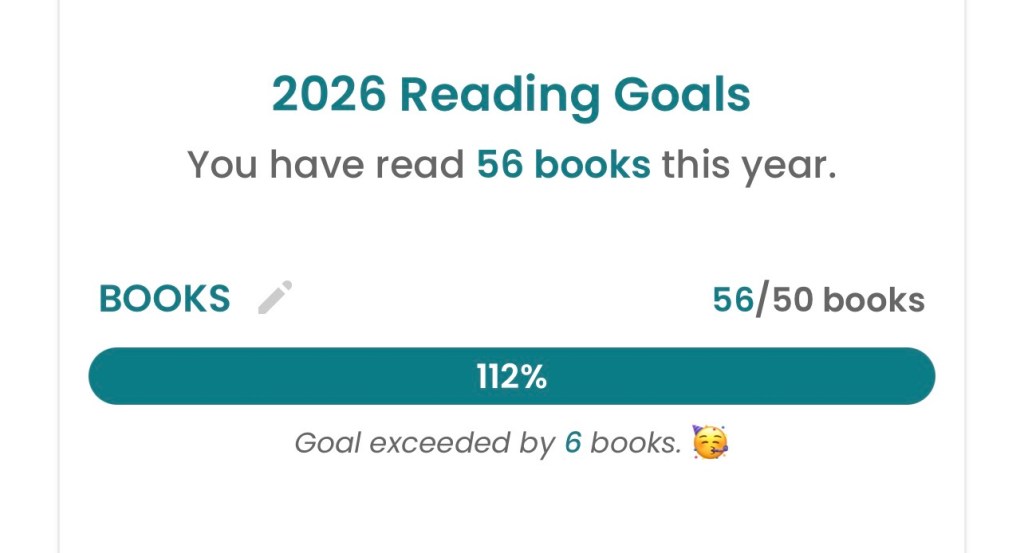
At the beginning of the year, I set myself a goal of reading 50 books. It felt ambitious, particularly when life is busy and there are always plenty of other things competing for our attention. But I have already read 56 books. And that achievement has made me reflect on an important question:
Do we really not have enough time, or do we sometimes need to make better choices about how we use the time we have?
Time is about choices
We are all busy. There are jobs to do, emails to answer, meetings to attend, families to support and endless items on the ever-growing to-do list. It is easy to believe that there simply isn’t enough time for the things we enjoy or the things we know are important.
“I’d love to read more, but I don’t have time.”
“I really should exercise more, but I’m too busy.”
“I want to spend more time with my family.”
“I’d like to learn something new.”
“I keep meaning to…”
The list goes on.
The reality is that we may not always be able to create more time, but we can often make more intentional decisions about how we spend it. Creating the World Cup Room was a small change, but it represented something bigger. Simon made time for something he loved. I made time for something I valued. Nobody had to compromise completely. We simply found a way to create space for both.

What does this mean for leadership?
This is something I learned very clearly during my time as a headteacher. Your diary reflects your priorities!
As school leaders, our diaries can quickly become completely controlled by other people. Someone wants a meeting. There is an issue that needs resolving. An email arrives marked urgent. A member of staff needs support. A parent wants to speak to you. Before long, the week is full.
The problem is that a full diary does not necessarily mean that we are spending our time on the things that matter most. Two of my go-to approaches as a headteacher were to be very deliberate about how I managed my diary and to protect time for the things that I knew were important.
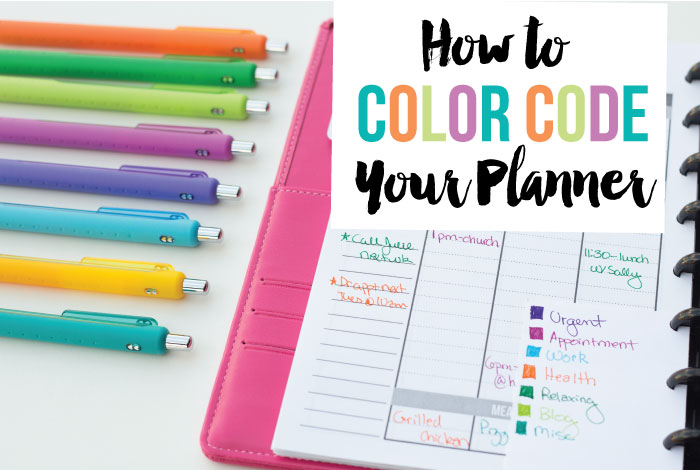
The first was to colour-code my diary.
Different colours represented different aspects of my role and helped me see, at a glance, where my time was actually going.
For example, I could distinguish between:
- Strategic leadership
- Meetings
- Staff development
- Time in classrooms
- Operational issues
- External commitments
- Personal or protected time
This was incredibly useful because our perception of how we spend our time is not always accurate. I might have felt that I was spending lots of time on strategic leadership, but when I looked at my diary, the colour coding might tell a very different story. Perhaps meetings had taken over. Perhaps operational issues were dominating. Perhaps I hadn’t spent enough time with staff and pupils. Perhaps the important work was constantly being squeezed out by the urgent work. Colour coding made the invisible visible.
My second go-to was the Eisenhower Matrix. The matrix encourages us to consider two simple questions: Is it urgent? Is it important? This creates four different categories.
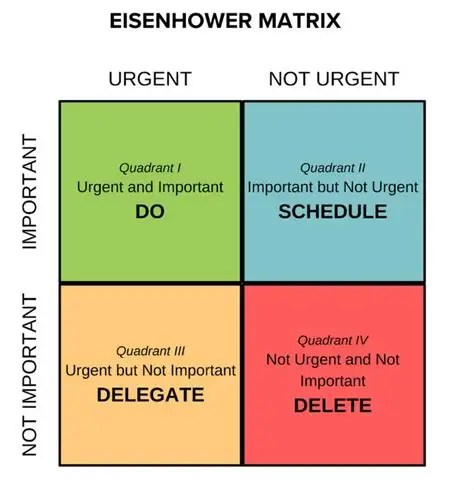
1. Urgent and important — Do it
These are the things that need immediate attention. A safeguarding issue. A serious incident. A significant problem that cannot wait. These should, quite rightly, take priority.
2. Important but not urgent — Schedule it
This is where many of the most valuable leadership activities sit. Strategic thinking. Professional development. Building relationships. Succession planning. Developing staff. Improving systems. Looking after your wellbeing. Reading and learning. The danger is that because these things are not always urgent, they can be continually postponed. And then postponed again. Until eventually something that was important becomes urgent. This is where managing your diary well becomes so important.
Schedule the important work before someone else fills your diary with the urgent work.
3. Urgent but not important — Delegate it
Not everything that arrives on our desk needs to be done by us. This can be a difficult lesson for leaders. Sometimes we take responsibility for things because it feels quicker or easier than explaining, supporting or trusting someone else to do them. But effective delegation is not simply about reducing our workload. It is also about developing others. If we try to do everything ourselves, we not only run out of time, but we also deny others opportunities to develop their skills and confidence.
4. Neither urgent nor important — Eliminate it
This is perhaps the most difficult category to identify. How much time do we spend doing things simply because we have always done them? Attending meetings that don’t really need us. Responding immediately to every email. Completing tasks that add little value. Sometimes making time for what matters means being brave enough to stop doing the things that don’t.
Make space for what matters
Perhaps the lesson from our World Cup Room is a simple one. Sometimes we don’t need a dramatic life change. We just need to make a little space. A different routine. A clearer boundary. A conscious decision. A television moved into another room!
As leaders, perhaps it is worth taking a look at our diaries and asking:
Does my diary reflect my priorities?
Am I spending enough time on what is important, rather than simply responding to what is urgent?
What could I delegate?
What could I stop doing?
Where do I need to protect focus time?
And perhaps, beyond leadership:
What matters to me personally, and am I making enough time for it?
Because time is precious. We cannot create more of it. But we can become more intentional about how we choose to spend it. And sometimes, making time for what matters starts with one small decision. For Simon, that was creating a World Cup Room. For me, it was picking up a book. For leaders, perhaps it starts with opening the diary and making sure that the things we say matter are actually given the time they deserve.
After all, our diaries don’t just show us where our time goes. They reveal what we truly prioritise.

This blog is part of the blog series from Antwis Collaborative – The Leadership Lens.

If you enjoyed this blog, please take a look at the Antwis Collaborative website. Home (antwiscollaborative.co.uk)

Connect with Us: Let’s explore how Antwis Collaborative can support your leadership and your school. Home (antwiscollaborative.co.uk)


Leave a Reply